This tool aims at accumulating javascript files from a given set of subdomains to discover hidden endpoints. It swims through JS files to find more JS files. It also creates a target-specific wordlist from the JS-files for further content discovery, appends new subdomains discovered from the JS files to the user specified subdomain file, and dumps all the discovered JS files neatly in a folder for static analysis.
git clone https://github.com/th3hack3rwiz/Fu-JS.git
cd  Fu-JS
chmod +x setup.sh
./setup.sh #This will install all requirements and configure the tool.- unfurl: https://github.com/tomnomnom/unfurl
- anew: https://github.com/tomnomnom/anew
- gau: https://github.com/lc/gau
- waybackurls: https://github.com/tomnomnom/waybackurls
- hakrawler: https://github.com/hakluke/hakrawler
- subjs: https://github.com/lc/subjs
- linkfinder: https://github.com/GerbenJavado/LinkFinder
- secretfinder: https://github.com/m4ll0k/SecretFinder
- ffuf: https://github.com/ffuf/ffuf
- qsreplace: https://github.com/tomnomnom/qsreplace
- httprobe: https://github.com/tomnomnom/httprobe
- fff: https://github.com/tomnomnom/fff
- gf: https://github.com/tomnomnom/gf
- hakcheckurl: https://github.com/hakluke/hakcheckurl
- python3, pip , pip3, golang
- Gathers javascript files using a given set of subdomains supplied by the user. How? -
- It crawls the subdomains using hakrawler
- Queries the wayback machine with tools like waybackurls + gau
- Subjs
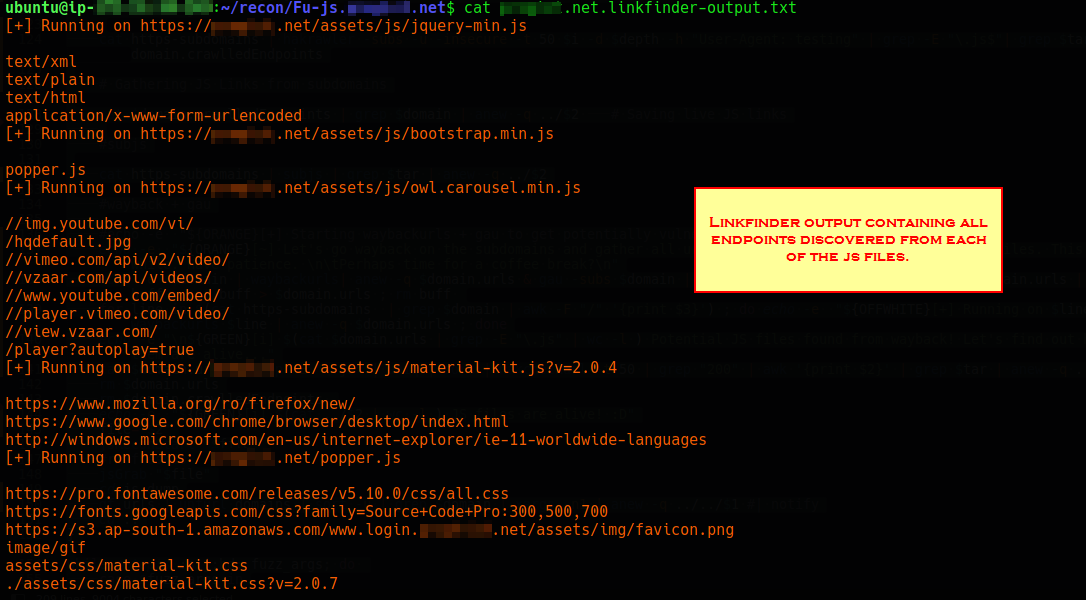
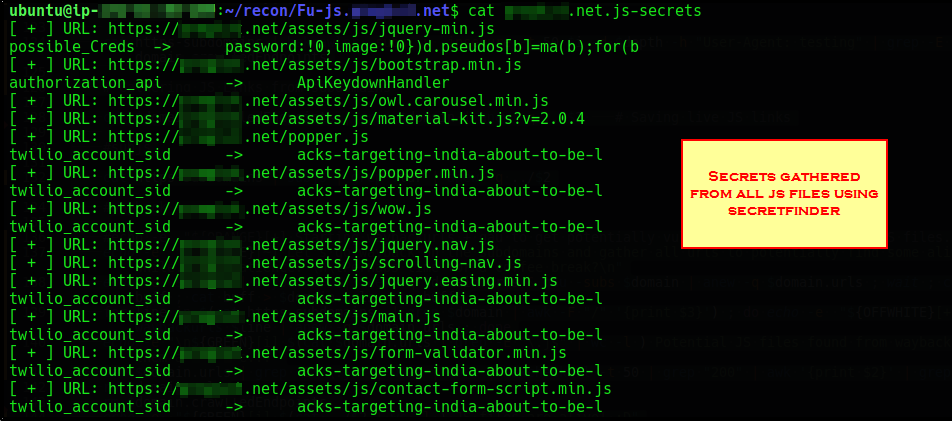
- Runs linkfinder.py and secretfinder.py on all those alive JS files that have either been fetched from tools like (waybackurls/gau/hakrawler/subjs) OR fed by the user (For eg: list of JS-files obtained from burp suite) to find endpoints and to grab any sensitive/hard coded secrets in those JS file. Stores the results for both in respective text files.
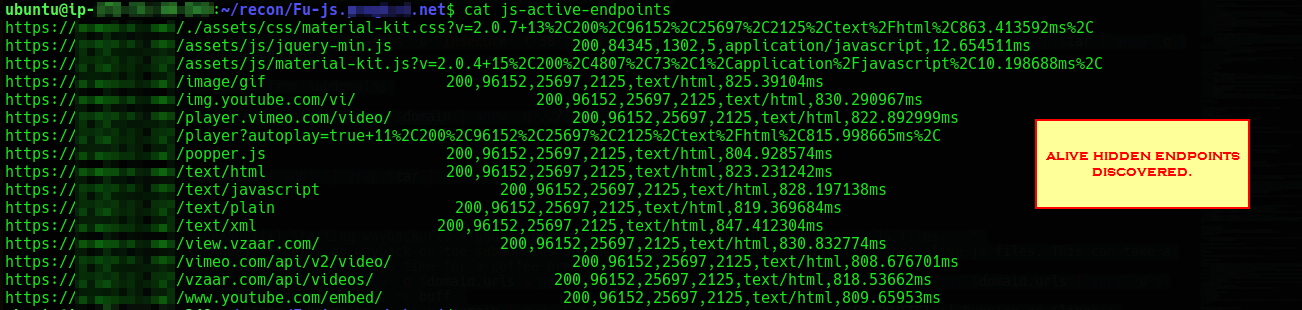
- It will then fuzz for all those endpoints on the domain of the js-file from which they were discovered.
- It will dump all the JS files neatly in a directory for static analysis.
- For eg: If it runs linkfinder.py on https://test.example.com/justajs.js and finds 3 endpoints (a,b,c), it will fuzz for https://test.example.com/a, https://test.example.com/b and https://test.example.com/c to see if those endpoints are alive on that domain. The positive results are stored neatly in a text file.
- Fu-JS runs the above processes recursively on newly discovered JS files found via linkfinder.py/secretfinder.py --> until no more new javascript files are discoverable.
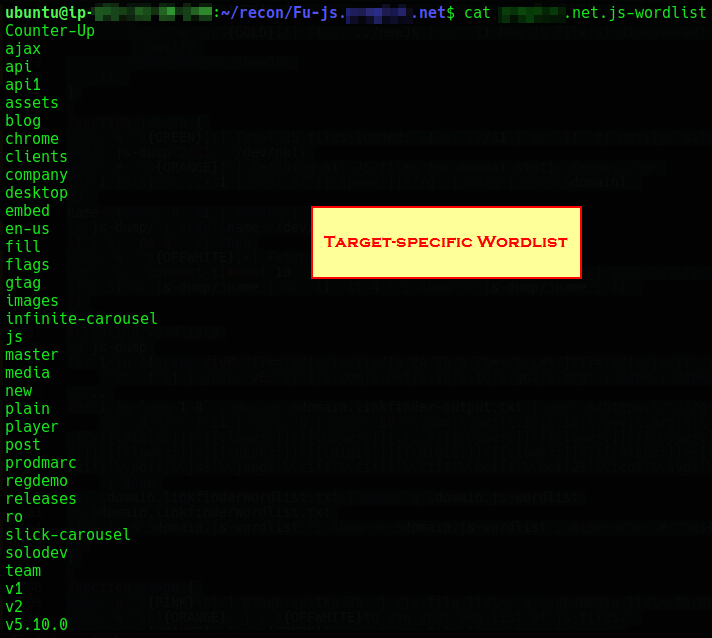
- It also creates a wordlist from the discovered paths using linkfinder + api words extracted from the static JS files which is very useful for target-specific content discovery.
- It also appends new subdomains that are discovered from the JS files, to the subdomain file provided by the user.
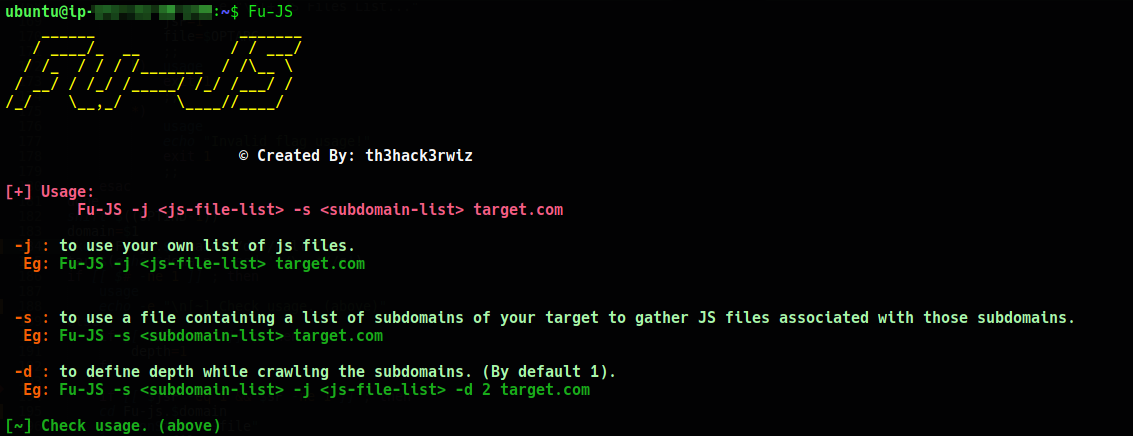
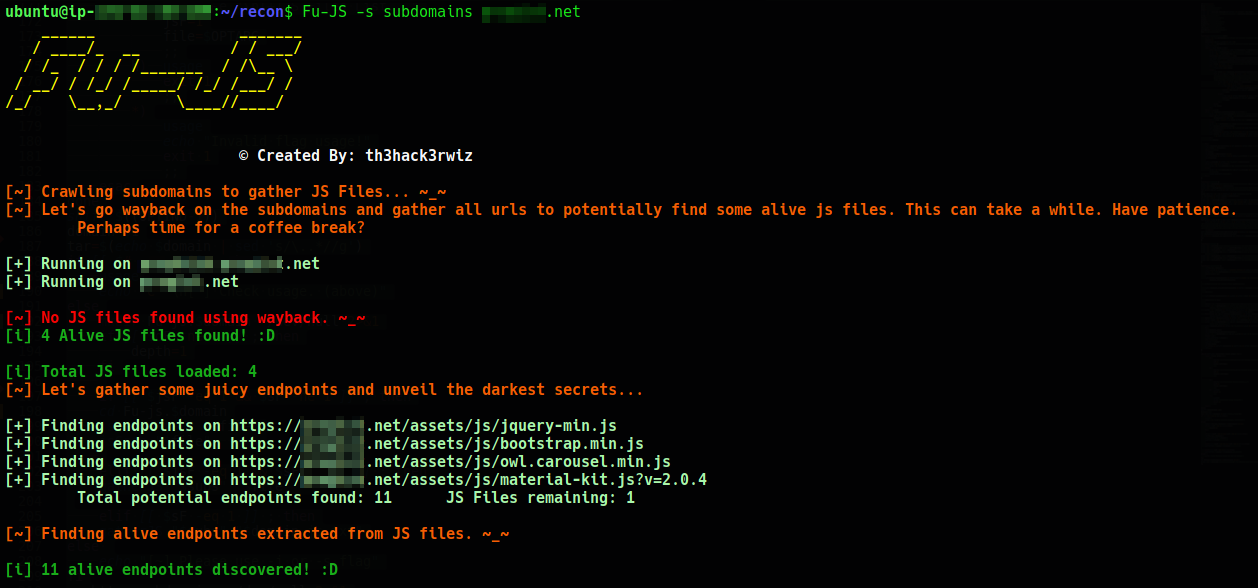
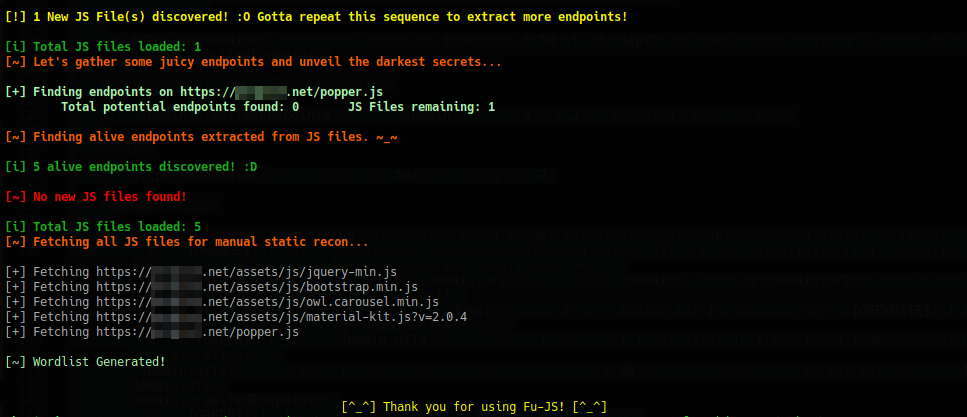
- In the following example Fu-JS gathers JS files from subdomains and performs its operations.
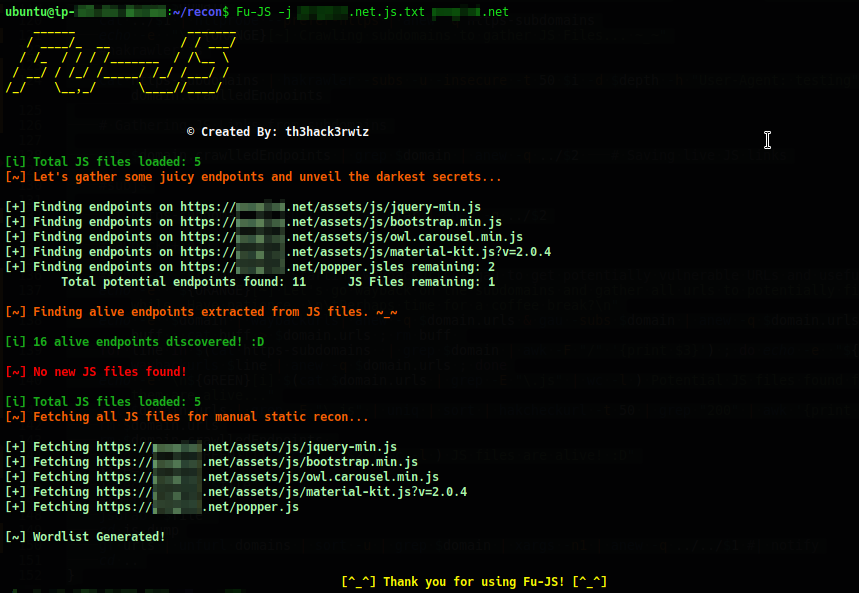
- In the following example Fu-JS uses the JS files supplied by the user and perform it's operations.
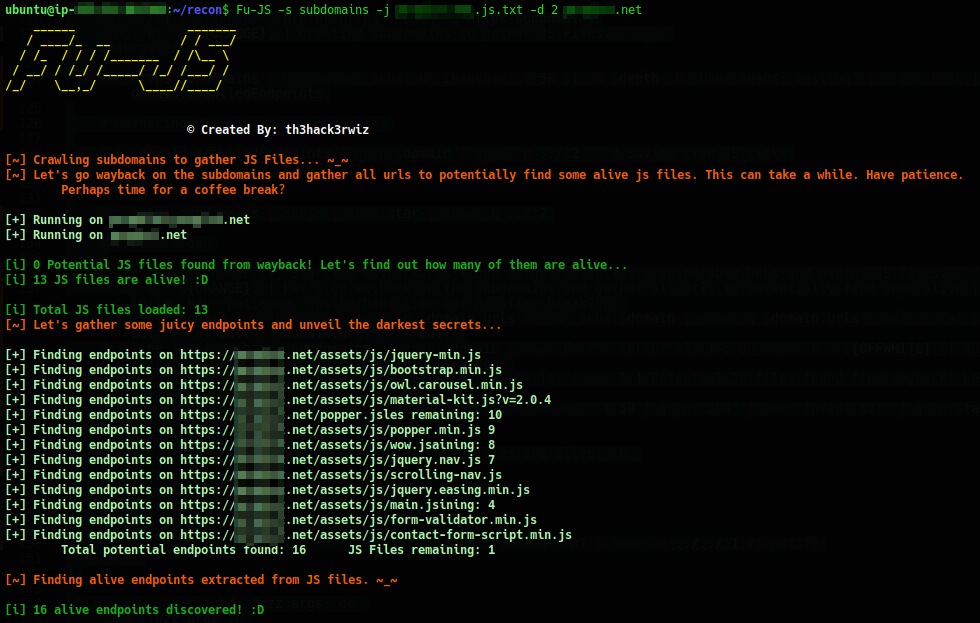
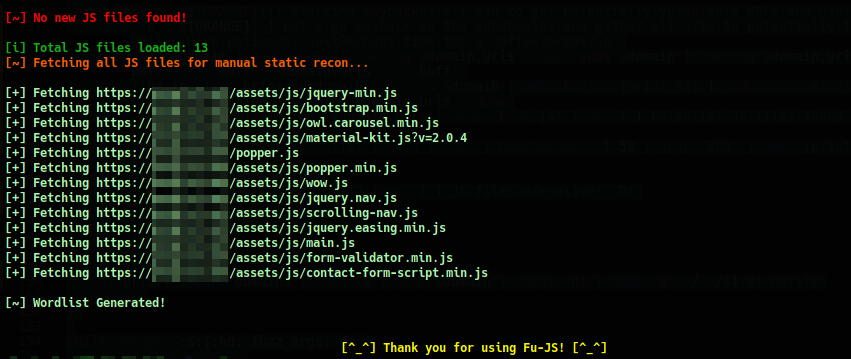
- In the following example Fu-JS gathers JS files from subdomains + crawls them with a depth of 2 + uses the JS files supplied by the use and performs its operations.
The following files are generated:-
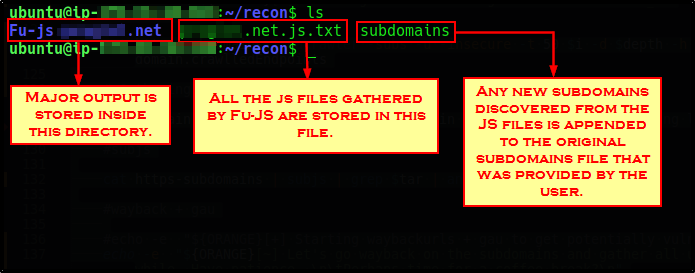
Let's look at the major outout:-
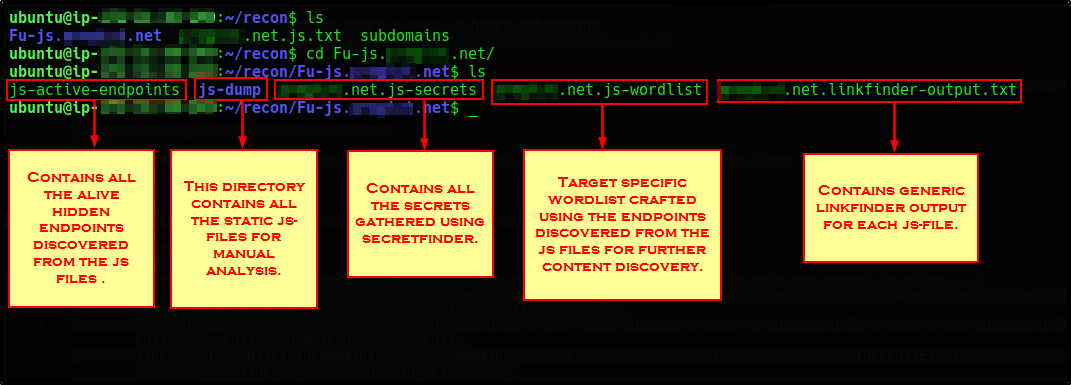
Hidden alive endpoints discovered from the Js files:-
All the javascript files are fetched and stored neatly in js-dump directory:-

All the secrets gathered from js files:-
Target specific wordlist formed:-
Linkfinder output of each and every js file:-